
Mostrando entradas con la etiqueta Departamento Inglés. Mostrar todas las entradas
Mostrando entradas con la etiqueta Departamento Inglés. Mostrar todas las entradas

10/2/09
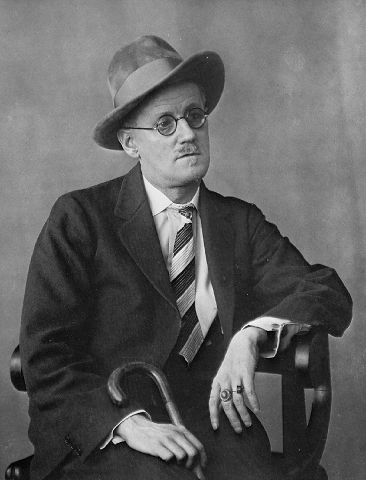
DUBLINERS by James Joyce

"THE SISTERS" (first story in DUBLINERS by James Joyce)
"THE SISTERS"
References:
• http://en.wikipedia.org/wiki/The_Sisters_(short_story)
• http://findarticles.com/p/articles/mi_m2455/is_n3_v32/ai_19517919
I would like to explore once more the tantalizing mysteries of "The Sisters," assuming two of Berni's main points -- his diagnosis of the priest's madness as a crisis of faith: the priest "comes dose to losing his mind because he is seriously on the verge of losing his faith; as well as his assertion that the infirm Father Flynn "contributes to a view that the Church is both corroded and a dangerously corrosive force" (Benstock 33).
As a story about the loss of faith and the corruption of religious values, Joyce's "The Sisters" has its roots in a Georg Ebers novel of the same title. The German Ebers, an Egyptian archeologist and author of historical romances, based his fiction on historical documents. In the case of The Sisters, Ebers focused on the ancient Memphite cult of Serapis, an institution that worshiped the Egyptian and Greek equivalents of the god Osiris, a god of death and resurrection.
Joyce peppers his story with allusions to the world Ebers recaptures.(1) Joyce's references to the East include the boy's dream, the word "gnomon," and the epithet Rosicrucian. The boy dreams of "long velvet curtains and a swimming lamp of antique fashion. I felt that I had been very far away, in some land where the customs were strange -- in Persia, I thought" (13). Appropriate for a story about death, this image recalls a festival of lamps that honored the dead one night a year in a commemoration observed throughout the East. The rows of oil lamps fastened to houses were intended "to light the shades on their return to their old homes and back again to the realm of the dead" (Frazer 398).
The word "gnomon," which the boy contemplates in conjunction with "simony" and "paralysis," also points toward the East. Not only is Alexandrian Greece invoked with the naming of Euclid, but Egypt has long been considered the source of geometry -- the gnomon in particular -- as a way of measuring a loss. Herodotus tells us that any man whose property sustained damage from Nile flooding would appeal to the king, "who would send inspectors to measure the extent of the loss, in order that he might pay in future a fair proportion of the tax at which his property had been assessed." The historian surmises that "this was the way in which geometry was invented, and passed afterwards into Greece -- for knowledge of the sundial and the gnomon and the twelve divisions of the day came into Greece from Babylon" (Herodotus 169). In "The Sisters" the gnomon not only symbolizes a significant loss, in this case the loss of faith, the word signals that one dimension of Joyce's story will involve Eastern influences.
A third example of joyce's suggestive technique occurs when the uncle calls his nephew "that Rosicrucian there" (11). Members of the "Ancient Order of Rosae Crucius" believed themselves to be "mystically in touch with the Great White Brotherhood of Egypt," a priesthood that flourished in the fifteenth century BCE, recalling the cults of Memphis. This "international fraternity of religious mystics" advocated a "dreamy aesthetic withdrawal from worldly concerns" (Gifford 30). Rosicrucians, and many historians, trace the origins of early Christian asceticism to these ancient Egyptian movements.
Intrigued by an historical approach that discerns patterns repeated in different times and places, Joyce delighted in weaving together details to illustrate that ancient Eastern philosophy, religion, and politics held some meaning for modern experience. While engaged in writing and revising "The Sisters," Joyce definitely had such Irish and Eastern correspondence in mind.(2) In the 1907 lecture he delivered in Trieste, "Ireland, Island of Saints and Sages," Joyce described the Celtic language as "oriental in origin . . . identified by many philologists with the ancient language of the Phoenicians." More than the language evolved from the East, however: "The religion and civilization of this ancient people, later known by the name of Druidism, were Egyptian" (CW 156). Perhaps most indicative of Joyce's design in "The Sisters" was his pronouncement that "Ancient Ireland is dead just as ancient Egypt is dead. Its death chant has been sung, and on its gravestone has been placed the seal" (CW 173).
• http://education.yahoo.com/homework_help/cliffsnotes/dubliners/5.html
• http://www.sparknotes.com/lit/dubliners/section1.html ----->
“The Sisters”
Summary
A young boy reflects on the impending death of his friend Father Flynn. Knowing that after three strokes the paralyzed priest has little time left, the boy makes a habit of walking past Father Flynn's house, looking for the light of the traditional two candles placed on a coffin that would indicate his death. Each time, the boy thinks of the word paralysis. One night at his aunt and uncle's house, the boy arrives at supper to find his uncle and Old Cotter, a family friend, sitting before the fire. Old Cotter has come to the house to share the news that Father Flynn is dead. Knowing that everyone waits for his reaction, the boy remains quiet.
While the aunt shuffles food to and from the table, a conversation ensues between the uncle and Old Cotter, and the uncle notes the high hopes Father Flynn had for the boy. He hints that Father Flynn planned to prepare the boy for the priesthood and remarks on the friendship between them. Old Cotter, however, thinks of Father Flynn as a “peculiar case” and insists that young boys should play with people their own age. While the uncle agrees with Old Cotter, the aunt is disturbed that anyone could think critically of Father Flynn. She asks Old Cotter to clarify his point, but Old Cotter trails off and the conversation ends. That night, Old Cotter's comments keep the boy awake, and he dreams of Father Flynn smiling and confessing something to him.
The next morning the boy visits Father Flynn's house, where a bouquet of flowers and a card hang from the door handle. Instead of knocking, he walks away and reminisces about the time he spent there. He used to bring Father Flynn snuffing tobacco from his aunt, and Father Flynn would teach him things, such as Latin pronunciation and the parts of the Mass. Remembering Old Cotter's cryptic comments, the boy then tries to recall more of his dream from the night before, but he can remember only a Persian setting—he cannot remember the end. That evening the boy visits the house with his aunt, and they kneel at Father Flynn's open coffin with one of Father Flynn's sisters, Nannie, to pray. Afterward, the three retire to another room to join Eliza, Father Flynn's other sister. Over sherry and crackers they discuss Father Flynn's death, his taxing career as a priest, and the helpful services of Father O'Rourke, another priest who anointed Father Flynn and completed all of the necessary paperwork and death notices. All the while the boy remains quiet. The story ends with Eliza's recollection of Father Flynn's increasingly odd behavior, which started with dropping a chalice during Mass. When one night Father O'Rourke and another priest found Father Flynn shut in a confessional box, laughing to himself, they finally realized he was sick.
Analysis
In “The Sisters,” and in the rest of the stories in Dubliners, strange and puzzling events occur that remain unexplained. Father Flynn suffers from paralyzing strokes and eventually dies, but his deterioration, epitomized by his laughing frenzy in a confessional box, also hints that he was mentally unstable. The reader never learns exactly what was wrong with him. Similarly, Father Flynn and the young narrator had a relationship that Old Cotter thinks was unhealthy, but that the narrator paints as spiritual when he recounts the discussions he and Father Flynn had about Church rituals. However, the narrator also has strange dreams about Father Flynn and admits to feeling uncomfortable around him. Joyce presents just enough information so that the reader suspects Father Flynn is a malevolent figure, but never enough so that the reader knows the full story. Such a technique is hinted at in the first paragraph of the story. The narrator thinks of the word paralysis when looking at Father Flynn's window and says the word sounds strange, like the word gnomon, a term that generally refers to instruments, like the hand on a sundial, that indicate something. Joyce does exactly that: He points to details and suggestions, but never completes the puzzle.
The physical presence of Father Flynn lingers throughout the story, coloring the narrator's experience of dealing with death in life and showing how a death interrupts normal human activities. Father Flynn plays a fleshly role in the story. His approaching death makes the narrator think of the corpse, which he eventually sees. When Father Flynn dies, the narrator continues to think of his physical presence, particularly the lurid way in which his tongue rested on his lip, and dreams of his face. Such bizarre physical images evoke the awkward nature of death. Like the episodes of Father Flynn's odd behavior that the sisters recount, the narrator's memories give Father Flynn a haunting presence that is fearful and mysterious, not beautiful and neat. In the final scene with the sisters, eating, drinking, and talking become difficult since death frames those activities. After viewing the corpse, the narrator declines the crackers offered because he fears that eating them would make too much noise, as if he might disturb Father Flynn in his coffin. Similarly, the narrator's aunt is unable to broach the subject of death. She asks questions about how Father Flynn died, but her thoughts trail off. Father Flynn may be dead, but in many ways he is still very present among the living.
The inability of the narrator and his aunt to eat and speak during their visit to the sisters recalls the sense of paralysis that the narrator connects to the dying Father Flynn in the story's opening paragraph. This link between paralysis or inaction to both death and religion underpins all the stories in Dubliners. Characters face events that paralyze them from taking action or fulfilling their desires, as though they experience a kind of death in life. In “The Sisters,” such paralysis is connected to religion through Father Flynn. Father Flynn's dropping of the chalice and his inability to grasp the same object in his coffin suggest that the rituals of religion lead to paralysis. His sisters also attribute his demise to the strains of clerical life. The crippling quality of religion resurfaces in other stories like “Grace,” in which Joyce more directly questions the role of the Church in the lives of Dubliners.
This story opens with an image of a Dubliner gazing through a window and reflecting on a dilemma. Such a symbol appears throughout the collection, and here it is particularly important because it draws attention to the narrative point of view. “The Sisters” is the first of three stories in the collection told in first-person point of view. As in the other two stories, “An Encounter” and “Araby,” the narrator never divulges his name and rarely participates in the conversations. The opening image of the window in the first paragraph reinforces this sense of quiet, detached observation, which the narrators of the later stories adopt. Through this narrative technique Joyce suggests that even first-hand experience is in some ways voyeuristic, and that it's possible for a person to observe his or her own life from the outside.
• http://www.cliffsnotes.com/WileyCDA/LitNote/id-93,pageNum-53.html
AUDIO OF THE STORY:
http://librivox.org/short-story-collection-vol-029/
26/1/09
YOUR STORIES 3 - English Reading Club - Bookworms
FEET by Fabiola Mecías Pumar.
I see my feet, they are there at the bottom or at the beginning of my body, it depends on how one builds the idea of the body. I could look at them, they are here with me, they are part of me, but I am seeing them in my mind, thinking about them, what relation have I with them?
My feet are one of my favourite parts of my body. They are little and they have sinuous lines. And I like lines, sinuous lines specially. I am particularly sensible to lines, curved lines cause me a sort of pleasure (it is not by accident that I have decided to be a painter).A convexity, then concavity, then convexity again. These curves give contour to their profiles. They are little and now some wrinkles have appeared.
They are free feet. I have never liked the sensation on them of being packed tight. Seeing some feet coming out of their shoes overwhelmed, distorted, deformed, displeases me so much it seems they have been prisoners to footwear. I can remember myself being a six-year-old child, in bed, before sleep, giving a massage to my feet, wanting them to expand at the end of the day. I kept doing that naturally and spontaneously. Then in my twenties theatre lessons came along and dance lessons, and here to massage the feet became part of the training. Once one of my theatre teachers ( I am really grateful to her, I have really learnt from her) told us: " A bird can fly high because it has good clutches to grip". It is true, they need them to properly seize a branch at landing. Land is the base. Feet. A bird knows that if air provides great pleasures, freedom, a wide perspective and light and delightful support (who has not dreaming of flying or, who has not flying on dreaming?), land nourishes and gives rest. So, feet if you are confident at a good landing, then you feel able to fly to remote worlds so you can create in reality.
One can also see the body as a tree, so feet are one's roots and if one is well-rooted, well planted, one can develop well.
And I love dancing, and walking and running, and travelling. By saying that, a sentence comes to my mind, it is written on a book which is my treasure, my mother began to write it when I was born to register my first days and filled it with photos. One of the sentences is written in first person as if it was me talking after having just started to walk. The phrase is: "I could not believe that it would be so great to walk and to run!"
Feet, then a world
THE SINK by Pili Ortega
The sink is the place where, at nights, I look for the most hidden secrets of my neighbours. There, next to the sink, while they are not watching me, I bring together my eye to the waste pipe and then I can see that small wedding ring which the blonde of the sixth floor has thrown away through the sink, after she found out that her husband had forgotten their anniversary again, although for sure he is not in love with any other woman. I can also hint the disappointed expression of her face, the sadness, the frustration, and later on, I also discover her husband’s wide eye through my sink, his enormous dark eye behind a short-sighted pane of glass which stares at the ring rolling down and reminds himself of the very day he bought it. How happy he smiled! How much love he should have felt just to invest his whole savings in that rolling ring. How stupid he had behaved!! And then, at this real moment, I can also find out through my sink, through his short-sighted eye all the anger, all the rage while he thinks again and again, obsessively, about the nice pair of shoes that this year he had hidden behind the coach just to surprise his blonde in their anniversary day
I see my feet, they are there at the bottom or at the beginning of my body, it depends on how one builds the idea of the body. I could look at them, they are here with me, they are part of me, but I am seeing them in my mind, thinking about them, what relation have I with them?
My feet are one of my favourite parts of my body. They are little and they have sinuous lines. And I like lines, sinuous lines specially. I am particularly sensible to lines, curved lines cause me a sort of pleasure (it is not by accident that I have decided to be a painter).A convexity, then concavity, then convexity again. These curves give contour to their profiles. They are little and now some wrinkles have appeared.
They are free feet. I have never liked the sensation on them of being packed tight. Seeing some feet coming out of their shoes overwhelmed, distorted, deformed, displeases me so much it seems they have been prisoners to footwear. I can remember myself being a six-year-old child, in bed, before sleep, giving a massage to my feet, wanting them to expand at the end of the day. I kept doing that naturally and spontaneously. Then in my twenties theatre lessons came along and dance lessons, and here to massage the feet became part of the training. Once one of my theatre teachers ( I am really grateful to her, I have really learnt from her) told us: " A bird can fly high because it has good clutches to grip". It is true, they need them to properly seize a branch at landing. Land is the base. Feet. A bird knows that if air provides great pleasures, freedom, a wide perspective and light and delightful support (who has not dreaming of flying or, who has not flying on dreaming?), land nourishes and gives rest. So, feet if you are confident at a good landing, then you feel able to fly to remote worlds so you can create in reality.
One can also see the body as a tree, so feet are one's roots and if one is well-rooted, well planted, one can develop well.
And I love dancing, and walking and running, and travelling. By saying that, a sentence comes to my mind, it is written on a book which is my treasure, my mother began to write it when I was born to register my first days and filled it with photos. One of the sentences is written in first person as if it was me talking after having just started to walk. The phrase is: "I could not believe that it would be so great to walk and to run!"
Feet, then a world
THE SINK by Pili Ortega
The sink is the place where, at nights, I look for the most hidden secrets of my neighbours. There, next to the sink, while they are not watching me, I bring together my eye to the waste pipe and then I can see that small wedding ring which the blonde of the sixth floor has thrown away through the sink, after she found out that her husband had forgotten their anniversary again, although for sure he is not in love with any other woman. I can also hint the disappointed expression of her face, the sadness, the frustration, and later on, I also discover her husband’s wide eye through my sink, his enormous dark eye behind a short-sighted pane of glass which stares at the ring rolling down and reminds himself of the very day he bought it. How happy he smiled! How much love he should have felt just to invest his whole savings in that rolling ring. How stupid he had behaved!! And then, at this real moment, I can also find out through my sink, through his short-sighted eye all the anger, all the rage while he thinks again and again, obsessively, about the nice pair of shoes that this year he had hidden behind the coach just to surprise his blonde in their anniversary day
MASCULINITIES
- READINGS FOR FEBRUARY – MARCH
(FILMS / AUDIOS / TEXTS /PAINTINGS)
TOPIC: “MASCULINITIES”
We will be looking at the shaping of the hero in some literary words. Different notions of the hero will be approached, taking into account autobiography, the picaresque output of masculine “heroic” characters, the concept of the modern hero surviving a hostile world, exiles, and the process of coming to terms with the self. - Where? Vigo - EOI
- When? Tuesdays - 18:30 -20:00
- or 20:00 -21:30
- Room: E8
- EXCERPTS OF THE FOLLOWING WORKS:
1. “The Life and Opinions of Tristram Shandy” (1759) by Lawrence Sterne
( Filmic support, by Michael Winterbottom). 13th and 20th of January
2.“David Copperfield” (1849-50) by Charles Dickens (filmic and textual support).
Topic for discussion: “The Victorian Frame of Mind”. 27th of January
3.“Dubliners” by James Joyce. 3rd and 10th of February. Film: “The Dead” by John Houston
4. The Romantics – William Blake / Samuel Taylor Coleridge / William Wordsworth. Topic for discussion: the Ideals of the French Revolution. Visual Support: Blake’s paintings / BBC Documentary on the Romantics. 17th of February / 3rd of March /10th of March.
5. “The Wizard of the Crow” by Ngugi wa Thiong’o (2006). 17th of March
13/1/09
YOUR STORIES 2 - English Reading Club - Bookworms
ROCKS by César Nieves
Indelible witnesses and traces of the pass of time in our nearest Universe. Ancient bulks, sentries of the space, guardians of the vigilantes of the stars in the slow nights that caress the sky and the sunrises that caress the horizons. Bastions, watchtowers, fortresses of imaginary wars, shelter of beings and souls from the beginning of the times, shelter of life.
How many sunrises will you see? Spectators of a never-ending performance, you will be ever-present until the end of times. Milestones in the trials of human endeavour.
FORGOTTEN UMBRELLAS by Luis Domínguez de la Iglesia
There was a sudden gust of wind, a strong and coward blow of the wind, a gale, a violent squall. I could not gauge the effort my Lord had to perform before the surrender. Neither my structure nor the strength of Lord Fabian were enough to overwhelm nature’s force. The wind tore us apart. Lord Fabian would helplessly watch the path through which I will initiate the soaring whilst our twenty years of close friendship -- almost a chemical bond – diluted by my getting out of his sight, beyond his reach.
There was a time when I was his constant companion. He personally carved his initials into my handle. LFU, before Lord Fabian Usher, now Lost Forgotten Umbrella. I was very proud of being part of the valuable personal belongings of my Sir. He never left the manor house without his hat and his umbrella, thus, I had the opportunity to know the most interesting places and the most different people. “May I have your hat and your umbrella, Sir?” The most exclusive clubs of London were such as my second house. Elegant ladies had found beneath me an appropriate shelter amid unexpected showers. I witnessed furtive kisses, prelude to passionate love affairs.
My new reality is the mud and the ivy surrounding the spoiled garden of the mired house where I landed. The only person I could see was the old woman who would come seven days a week to nurture the kittens. I woke up several times during my first night in this kind of haunted house. Different strident noises and unbearable smells instead of the scents of flowers and the rhythmic sound of the clock.
Now my only hope is to be found by a skilful vagabond, who might be able to fix me, and be acquired in a car boot sale
Indelible witnesses and traces of the pass of time in our nearest Universe. Ancient bulks, sentries of the space, guardians of the vigilantes of the stars in the slow nights that caress the sky and the sunrises that caress the horizons. Bastions, watchtowers, fortresses of imaginary wars, shelter of beings and souls from the beginning of the times, shelter of life.
How many sunrises will you see? Spectators of a never-ending performance, you will be ever-present until the end of times. Milestones in the trials of human endeavour.
FORGOTTEN UMBRELLAS by Luis Domínguez de la Iglesia
There was a sudden gust of wind, a strong and coward blow of the wind, a gale, a violent squall. I could not gauge the effort my Lord had to perform before the surrender. Neither my structure nor the strength of Lord Fabian were enough to overwhelm nature’s force. The wind tore us apart. Lord Fabian would helplessly watch the path through which I will initiate the soaring whilst our twenty years of close friendship -- almost a chemical bond – diluted by my getting out of his sight, beyond his reach.
There was a time when I was his constant companion. He personally carved his initials into my handle. LFU, before Lord Fabian Usher, now Lost Forgotten Umbrella. I was very proud of being part of the valuable personal belongings of my Sir. He never left the manor house without his hat and his umbrella, thus, I had the opportunity to know the most interesting places and the most different people. “May I have your hat and your umbrella, Sir?” The most exclusive clubs of London were such as my second house. Elegant ladies had found beneath me an appropriate shelter amid unexpected showers. I witnessed furtive kisses, prelude to passionate love affairs.
My new reality is the mud and the ivy surrounding the spoiled garden of the mired house where I landed. The only person I could see was the old woman who would come seven days a week to nurture the kittens. I woke up several times during my first night in this kind of haunted house. Different strident noises and unbearable smells instead of the scents of flowers and the rhythmic sound of the clock.
Now my only hope is to be found by a skilful vagabond, who might be able to fix me, and be acquired in a car boot sale
15/12/08
YOUR STORIES 1 - English Reading Club - Bookworms
FAY WELDON’S WEEKEND, http://en.wikipedia.org/wiki/Fay_Weldon, http://www.redmood.com/weldon/interviews.html
Talking of Fay Weldon´s weekend and inspired by the title of her short story, it occurred to us that we could dwell on daily objects as titles for our personal stories. These are some of the results:
YOUR STORIES (1)
José Domingo Fernández Lariño bespeaks of an object intimately linked to our life stories, the bed, but in this case, the bed turns out to be the axe for other story telling. Sailing through the seven seas, as one would say, José Domingo treasures thousands of stories about the sea and its people.
STORY ABOUT A BED
It was on the bed of my cabin where I spent most of the time talking to Hassan: teaching him mechanics, the running of machines on board the ship we shared plus a little of French as I used to do with cadets or as they say “stagiaires”. This was Hassan’s second ship as a cadet, he had already been on board of another ship for three months. On board of that ship, a vast wall of silence had actually separated him from the rest of the crew members because he could not speak Spanish, and the Spanish crewmembers didn’t understand French.
Hassan would lie on top of the sheets but I taught him how to use them properly. As I tried to convince him of the prosaic use of things, he would rather fathom in other direction, he would intently preach me so I could righteously swerve in the direction of Islam. As he was enormously grateful to me, he believed it his duty to make me change my mind in order not to be consumed eternally by the lapping fires of hell.
Hassan would also complained about his not-very-thrifty-wife. He said “elle mange boucoup d’argent” and explained to me his careful surveillance upon her, namely, he gave her what he considered enough so she and her baby could be properly fed.
As a shipmate I had to disregard his growing disrespect towards my person and rank because like the other cadets he took for granted that education and culture were a synonym of numbed dumbness.
As he finished his training period, he went back home. I finish my story, back in that bed, in that cabin, where he last said goodbye to me.
by José Domingo Fernández Lariño (Advanced 2 student of English, Vigo EOI)
Luis Rodríguez chant is on books, and the landscape of books his eye rests upon:
BOOKS
Someone has been putting them on the shelves one by one, according to size. Some books are about trees or bushes and they live between a biography collection and a book on cats. Next to them there is a dictionary of art and a collection of books on many subjects, like photography or birds. None of them is larger than the others and the top of the books form a straight line or a gentle curve in every shelf.
There are books everywhere you look at in the room, two doors and a window curdle the landscape of books.
Apart from that, there is an iron on the table which is standing up proudly among this large amount of paper, sewn or glued together with words in between, among, up and down.
By Luis Rodríguez (Advanced 2 student of English, Vigo EOI)
MORE STORIES TO COME IN SHORT ........
Talking of Fay Weldon´s weekend and inspired by the title of her short story, it occurred to us that we could dwell on daily objects as titles for our personal stories. These are some of the results:
YOUR STORIES (1)
José Domingo Fernández Lariño bespeaks of an object intimately linked to our life stories, the bed, but in this case, the bed turns out to be the axe for other story telling. Sailing through the seven seas, as one would say, José Domingo treasures thousands of stories about the sea and its people.
STORY ABOUT A BED
It was on the bed of my cabin where I spent most of the time talking to Hassan: teaching him mechanics, the running of machines on board the ship we shared plus a little of French as I used to do with cadets or as they say “stagiaires”. This was Hassan’s second ship as a cadet, he had already been on board of another ship for three months. On board of that ship, a vast wall of silence had actually separated him from the rest of the crew members because he could not speak Spanish, and the Spanish crewmembers didn’t understand French.
Hassan would lie on top of the sheets but I taught him how to use them properly. As I tried to convince him of the prosaic use of things, he would rather fathom in other direction, he would intently preach me so I could righteously swerve in the direction of Islam. As he was enormously grateful to me, he believed it his duty to make me change my mind in order not to be consumed eternally by the lapping fires of hell.
Hassan would also complained about his not-very-thrifty-wife. He said “elle mange boucoup d’argent” and explained to me his careful surveillance upon her, namely, he gave her what he considered enough so she and her baby could be properly fed.
As a shipmate I had to disregard his growing disrespect towards my person and rank because like the other cadets he took for granted that education and culture were a synonym of numbed dumbness.
As he finished his training period, he went back home. I finish my story, back in that bed, in that cabin, where he last said goodbye to me.
by José Domingo Fernández Lariño (Advanced 2 student of English, Vigo EOI)
Luis Rodríguez chant is on books, and the landscape of books his eye rests upon:
BOOKS
Someone has been putting them on the shelves one by one, according to size. Some books are about trees or bushes and they live between a biography collection and a book on cats. Next to them there is a dictionary of art and a collection of books on many subjects, like photography or birds. None of them is larger than the others and the top of the books form a straight line or a gentle curve in every shelf.
There are books everywhere you look at in the room, two doors and a window curdle the landscape of books.
Apart from that, there is an iron on the table which is standing up proudly among this large amount of paper, sewn or glued together with words in between, among, up and down.
By Luis Rodríguez (Advanced 2 student of English, Vigo EOI)
MORE STORIES TO COME IN SHORT ........
2/12/08
English Reading Club - Bookworms

The Reading Club has been having a look at:
TAKING PICTURES BY ANNE ENRIGHT
Pawed, used, loved and lonely
Anne Enright's new stories take Hermione Lee to sad, stifling places - but make her laugh too
"TAKING PICTURES"
"Little Sister". By Anne Enright
The title offers the vacuum of the non –possessive article as it would naturally become in this context, “my little sister.” The hollowness that precedes the title heralds us into an already-established distance between narrator and “little sister” providing her with overtones of the religious. The story starts in “medias res,” little sister has already died, and the narrative voice intones a repetitive “I am not guilty for this” that already makes us suspicious of a likely liability on the part of the narratorial sister. We are offered a systematic happy family background but we are already inquisitive as to why little sister died of anorexia. Only one or two clues strewn through the narrative lead us into some sort of conviction of disaffection on the part of the father. Little sister disappears from the narrative to literally disappear already turned into an emaciated walking body to later die in hospital.
THESE ARE SOME OF THE QUESTIONS WE PULLED AT:
BY LOOKING AT THE TITLE WE CAN ALREADY INFER SOME DISTANCE BETWEEN THE SISTERS: Lack of possessive adjective “MY.” We mentioned that the lack of article could even have religious overtones. The story starts in "medias res", with "little sister" already dead. It opens up with the vagaries of the narratorial voice in a lethanic expiation of her own guilt.
FAMILY SECRETS- APPEASING OUR MINDS- PAYING FOR THE SINS OF OTHERS- NEGATIVE FAMILY CONNECTIONS ENCUMBERED BY BLOOD.
WHO’S TELLING THE STORY? / WHAT PERSPECTIVE ARE WE GIVEN? Limited vision and unreliable narrator
What are the tokens of growing up according to Serena? The drinking, the statutory sex, the high heels, getting into pubs ….
THE TIME OF THE STORY (flashbacks / flashforwards)
The FEELING OF GUILT. The guilt of one generation passing onto the other. Remorse / having a grudge against ../ vengeance
· When we first know about the fact that Serena is dead, the voice of "the other" tries to look for an explanation to see that there were no genetic forces involved in the bifurcated development of Serena and her.
· Family Secrets: When does Serena problem with "anorexia" start? Right after the metioning of the father she stops eating. The moment is graphically appointed in the text after “disaffection” takes place.
· There was no progression towards the illness, but it takes place just as she disappears from the narrative space, her home space, and she turns back, and the word is voiced like a ghostly appearance, as she is gaunt, and her eyes are glaring “anorexia”. According to this story, what is the profile of the Anorectic?
Her physical symptoms: her eye sockets are huge, she resembles a child rather than a woman. The consumptive illness empties her of her being, to turn her into a statuesque-like forever infant in the Dickensian fashion of female being perpetuated into the cast of childhood.
Comments and guidance by Ana María Sánchez Mosquera (PhD)
Suscribirse a:
Entradas (Atom)


 Entradas

